Look at what is happening in the Middle East right now and tell me you still believe in the single-point forecast.
Analysts are currently working with three broad trajectories for the conflict. Rapid de-escalation — damage severe but recoverable, markets stabilising within months. A middle path — weeks of intermittent Hormuz closure, sustained aviation disruption, escalating economic costs. And the worst case — a protracted war removing roughly one-fifth of global oil supply from the market, a shock that has no modern equivalent.
Three scenarios. Three radically different futures. Each carrying a probability, a severity, and a cascade of consequences running through energy markets, supply chains, food prices, and capital flows at the same time.
This is probabilistic financial modelling in real time — whether organisations call it that or not.
The world does not move in straight lines
Traditional financial planning works from a baseline. One number for oil price, inflation, growth, interest rates. That number gets embedded into budgets, investment cases, procurement contracts, and capital allocation decisions — and then it gets defended long after reality has moved on.
This approach was always fragile. In the current environment, it is professionally indefensible.
Oil moved from roughly $70 per barrel to over $100 in days when hostilities began. Recession probabilities in major economies doubled almost overnight. The conflict is hitting simultaneously through energy costs, shipping insurance, aviation, trade routes, and investor confidence. No single-point forecast captures this. A probability distribution does.
What probabilistic modelling actually gives you
Monte Carlo simulation and scenario stress-testing do not predict the future. They map the range of futures that are plausible, assign weight to each path, expose the tails, and — most importantly — force the people making decisions to confront the assumptions they have buried inside their baseline number.
The conceptual foundations of this approach are well established. Dr.Michael Rees, in Business Risk and Simulation Modelling in Practice (Wiley, 2015), provides one of the most rigorous and accessible treatments of how simulation methods relate to scenario analysis, sensitivity analysis, and optimisation — and why static models systematically fail under real-world uncertainty. The book remains a reference I return to. The Arabian Gulf situation is, unfortunately, a live demonstration of everything it argues.
Applied to the current situation, a properly constructed model tells you something useful and actionable. Under rapid de-escalation, your energy cost line recovers within one quarter. Under a four-to-six-week disruption, your margin falls within a calculable and manageable band. Under a prolonged closure, you are operating in a fundamentally different environment that requires responses you should have pre-agreed — not improvised.
The discipline imposes three things that most organisations actively avoid: stress-testing extreme but plausible assumptions, quantifying the financial impact of tail events before they materialise, and pre-committing to decision triggers so that leadership is not paralysed precisely when clarity matters most.
A European Fertiliser Distributor
A mid-sized European agricultural input company runs its annual procurement model in January. Baseline assumption: stable ammonia prices, normal transit times, no major disruption to Gulf shipping.
A risk analyst builds a Monte Carlo model with three correlated input variables — oil price, Hormuz disruption probability, and shipping insurance costs. Each variable is defined as a probability distribution, not a fixed number. Ten thousand iterations.
The output is revealing. The company's baseline sits at the 40th percentile of outcomes — meaning it is already an optimistic assumption, not a central one. The P80 outcome shows procurement costs 34 percent higher. The P95 tail renders two product lines uneconomical.
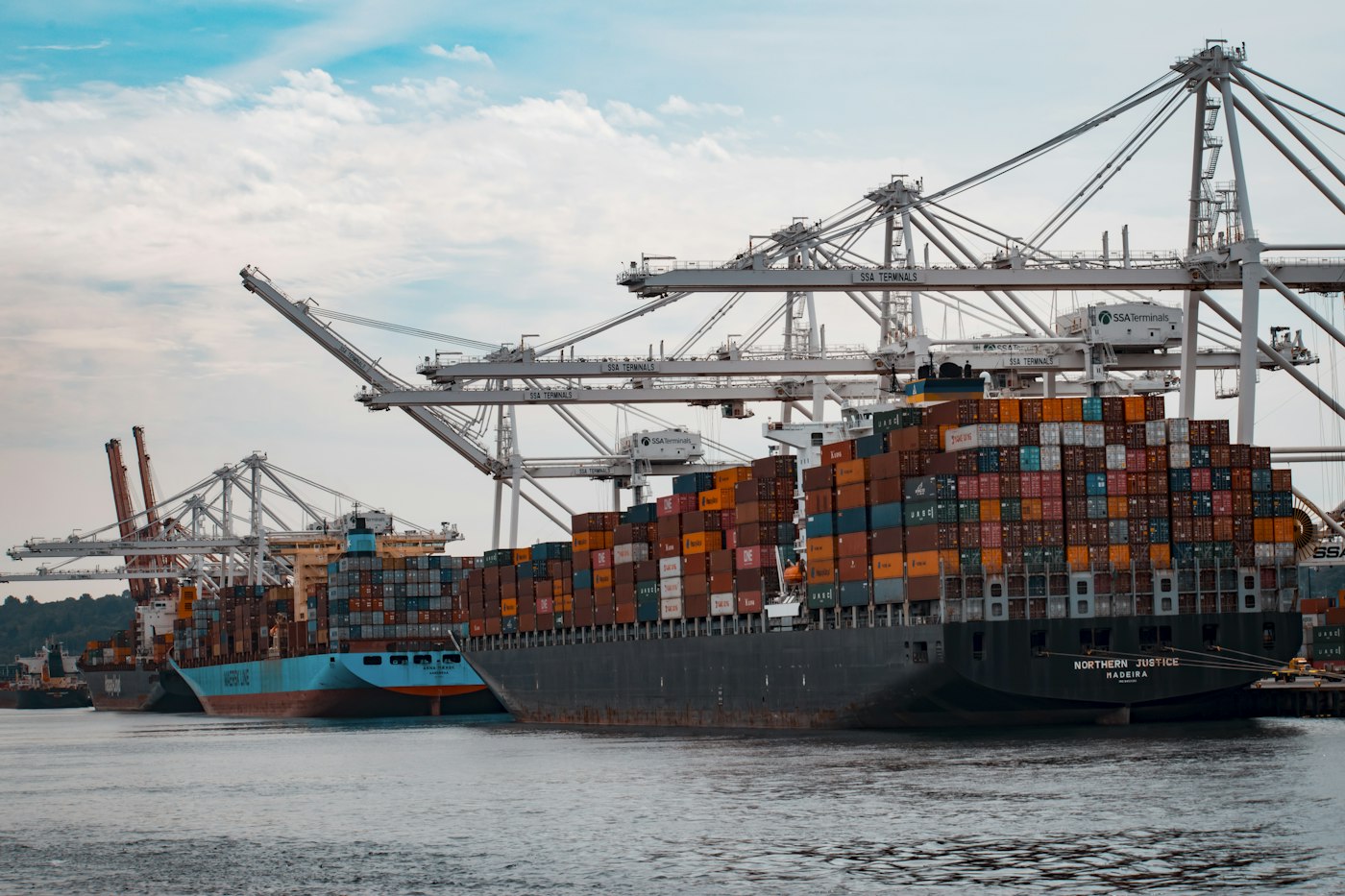
This is not a theoretical exercise. Urea prices have already risen 50 percent since the conflict began. Ammonia is up 20 percent. Roughly 40 percent of global nitrogen fertilizer exports transit the Strait of Hormuz — and the Strait is closed.
Armed with the model output in January, the distributor locks forward contracts on 60 percent of volume, restructures two customer agreements with explicit volatility clauses, and activates a pre-agreed alternative supplier. The competitors who ran a single-point forecast are now absorbing losses they never modelled and making reactive decisions under pressure.
The attitude, not just the tool
The real value of probabilistic modelling is not technical. It is an organisational attitude — a deliberate refusal to manage uncertainty by pretending it does not exist. Energy shocks, supply chain fractures, geopolitical reversals: these are no longer rare events requiring exceptional responses. They are the operating environment.
Every organisation — public or private, large or small, in any industry — now operates under structural volatility. The question is not whether your organisation faces uncertainty. The question is whether your decision-making process is designed to scan it, model it, and respond to it before it arrives at the door.
Build the model. Run the scenarios. Act on the ranges.
That is the professional standard this moment demands.